
The Best Fluffy Pancakes recipe you will fall in love with. Full of tips and tricks to help you make the best pancakes.
How to Use a Hot Air Brush on Fine Hair (Without Damage)
We’ve got some tips about how to use a hot air brush on fine hair in this post. Just read on…
Fine hair is delicate, prone to breakage, and easily damaged by excessive heat, yet many people still rely on hot tools to achieve volume and style.
The challenge is finding a way to use styling tools—especially hot air brushes—without causing long-term damage or flattening the hair.
Hot air brushes have become one of the most popular styling tools in recent years because they combine drying and styling in one step.
When used correctly, they can add volume, smooth frizz, and create a salon-style blowout at home. However, when used incorrectly—especially on fine hair—they can lead to dryness, split ends, and heat damage.
In this guide, you’ll learn exactly how to use a hot air brush on fine hair safely and effectively. From preparation to technique, we’ll break down simple, practical steps that help you get the best results while protecting your hair.
What Is a Hot Air Brush?
A hot air brush is a styling tool that combines the functions of a hair dryer and a brush into one device. It blows warm air while you brush through your hair, allowing you to dry, smooth, and style at the same time.
Unlike flat irons or curling wands that rely on direct high heat, hot air brushes use controlled airflow and moderate heat, making them a safer option for fine hair when used properly. The brush design also helps lift hair at the roots, which is essential for adding volume to fine, flat hair.
Most hot air brushes come with features such as:
- Multiple heat and speed settings
- Ionic technology to reduce frizz
- Ceramic or tourmaline coatings for even heat distribution
- Oval or round brush shapes for different styling results
For fine hair, these features are especially important because they allow you to style your hair without exposing it to excessive heat or tension.
Types of Hot Air Brushes
Not all hot air brushes are the same, and choosing the right type can make a big difference in how well it works on fine hair.
Oval Brush (Volumizing Brush)
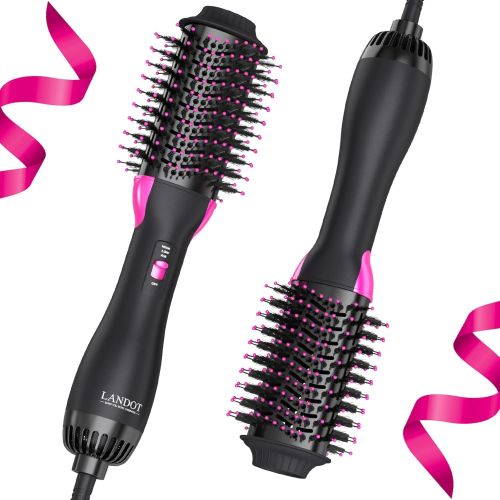
This is the most common type and is designed to create volume while smoothing the hair at the same time.
- Best for: Full blowouts and adding body
- Advantage: Lifts roots while smoothing lengths
- Limitation: Can be too bulky for very short or very fine hair
Round Brush
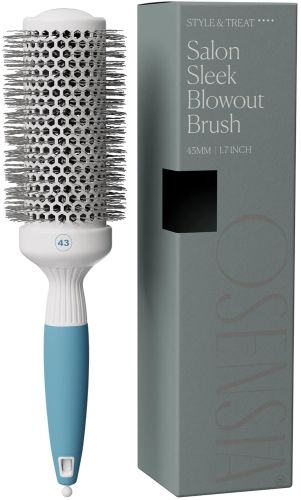
Round hot air brushes are smaller and more precise, making them ideal for targeted styling.
- Best for: Root lift, bangs, and shorter hair
- Advantage: Better control and less tension on fine strands
- Limitation: Takes longer to style the entire head
Rotating (Spin) Brush
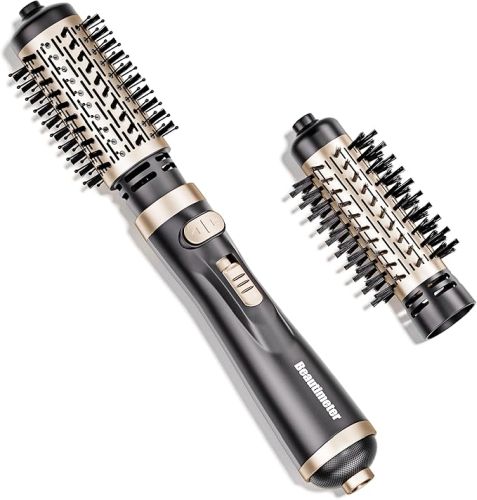
These brushes rotate automatically, wrapping hair around the barrel as you style.
- Best for: Beginners or users who struggle with coordination
- Advantage: Reduces manual effort and styling time
- Limitation: Less control over direction and tension
Paddle Brush Style
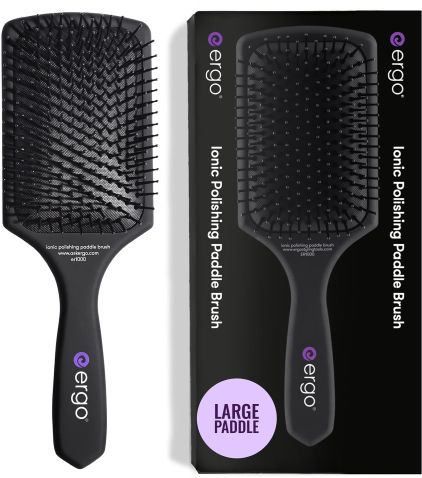
Less common, these are designed more for straightening than volumizing.
- Best for: Sleek, straight styles
- Advantage: Smooths hair quickly
- Limitation: Minimal volume, not ideal for fine hair needing lift
Choosing the right type depends on your goal. If your main concern is adding volume to fine hair, an oval or small round brush is usually the best choice.
Key Features Explained
Understanding the features of a hot air brush will help you use it correctly and avoid damaging fine hair.
- Heat Settings
Always choose a tool with multiple heat options. Fine hair responds best to low or medium heat, which is enough to style without causing unnecessary stress or breakage. - Ionic Technology
This helps reduce frizz and static by neutralizing charged particles in the hair. For fine hair, this means smoother strands without needing high heat. - Ceramic or Tourmaline Coating
These materials distribute heat evenly across the barrel, preventing hot spots that can burn or weaken delicate strands. - Barrel Size
Smaller barrels provide better control and lift at the roots, while larger barrels are better for longer hair and overall smoothing. Fine hair generally benefits more from smaller to medium barrel sizes. - Airflow Control
Consistent, moderate airflow is key. Too much force can tangle fine hair, while too little won’t dry effectively.
Common Mistakes
Even with the right tool, improper use can lead to damage. These are the most common mistakes people make when using a hot air brush on fine hair:
- Using High Heat Settings
Fine hair does not need high heat. Using the highest setting increases the risk of dryness and breakage. - Styling Soaking Wet Hair
Hot air brushes are not designed for dripping wet hair. This forces the tool to work harder and exposes hair to heat for longer periods. - Holding the Brush in One Spot Too Long
Concentrating heat in one area can cause damage. Always keep the brush moving. - Skipping Heat Protectant
Fine hair is more vulnerable to heat damage, so a heat protectant is essential before styling. - Using Large Sections of Hair
Working with large sections reduces effectiveness and increases the need for repeated passes, which can damage hair.
How to Choose the Right One
Follow these simple steps to pick the best hot air brush for your fine hair:
- Choose a model with at least 2–3 heat settings
- Go for a lightweight design for better control
- Select a smaller or medium barrel size for better root lift
- Look for ionic and ceramic technology for protection
- Avoid overly powerful or high-heat tools
If your hair is extremely fine or prone to breakage, prioritize gentle heat and precision over power.
Recommended Products
If you’re unsure where to start, here are some reliable options that work well for fine hair:
- Revlon One-Step Volumizer PLUS 2.0 – best overall for volume and ease of use
- Hot Tools 24K Gold One-Step Dryer – best for smooth, frizz-free results
- Conair InfinitiPRO Spin Brush – best for beginners
- Drybar Double Shot – best premium option for controlled styling
These tools balance heat, airflow, and usability, making them suitable for fine, delicate strands.
FAQs
Can I use a hot air brush every day on fine hair?
Yes, but it’s best to use low heat settings and always apply a heat protectant to minimize damage.
Is a hot air brush better than a flat iron for fine hair?
In many cases, yes. A hot air brush uses indirect heat and airflow, which is generally gentler than the direct heat of a flat iron.
Should I use a hot air brush on wet or dry hair?
Use it on damp, towel-dried hair. Avoid soaking wet hair to reduce heat exposure time.
Why does my hair still look flat after using a hot air brush?
This may be due to using a large barrel, insufficient root lift, or working with overly large sections of hair.
Final Thoughts
Using a hot air brush on fine hair doesn’t have to result in damage. With the right technique and tool, you can achieve smooth, voluminous styles while keeping your hair healthy.
The key is simple: use lower heat, work in small sections, keep the brush moving, and prioritize tools designed for gentle styling. When you follow these principles, a hot air brush becomes one of the safest and most effective tools for fine hair.